Search This Blog

Showing posts with label tanker. Show all posts

Tuesday, 13 August 2013

Ms Herald


1987: Hundreds trapped as car ferry capsizes


Forty-nine people have been confirmed dead - and dozens are missing - after a car ferry capsized just outside the Belgian port of Zeebrugge.
Rescuers say more than 400 people have been brought out of the ship alive. Many have been taken to hospitals in Bruges and Blankenburg suffering from cuts and bruises, hypothermia and shock.
Divers are still searching the upturned hull of the Herald of Free Enterprise for air pockets in which passengers may have survived. But hope is fading of finding anyone alive.
The tragedy happened just before 1900 GMT as the Townsend Thoresen ferry left Zeebrugge bound for Dover with 650 passengers on board, many of them Sun readers who had taken advantage of the newspaper's offer on a cut-price day trip to the Continent.

No time to send SOS

It is not clear how the disaster happened. Survivors say the boat went over in seconds and began filling rapidly with water. There was no time to send an SOS.
The only way out for many was to smash windows and clamber onto the side of the ship and wait to be lifted off.
Rescue helicopters, including two RAF Sea Kings, were at the scene within minutes. Dutch and Belgian boats in the area were also diverted to help in the rescue operation.
Maureen and Frank Bennett, from Crawley in Sussex, had been on a day trip to Belgium with their daughter and her boyfriend to celebrate their wedding anniversary.
From her hospital bed, Mrs Bennett said: "It was so cold...all we wanted to do was just get out. It was so frightening, it really was."
She was being filmed by a BBC camera crew when a member of the hospital staff brought her the news her daughter had been found and was safe and well. She burst into tears and said, "She's alive, she's alive. Thank God."

Human bridge

Another woman told how her husband had made himself into a human bridge so she and her daughter could climb across to safety - but when she called to him to follow he said there were others who needed help getting out. He has not been seen since.
The Queen has sent a message of sympathy. The Duke and Duchess of York have gone to Belgium on her behalf.
The Prime Minister, Margaret Thatcher, has flown to Zeebrugge. She paid this tribute to the emergency services: "It has been a night of great courage and a night of great professionalism and of concern on the part of all the rescue services."
Questions are already being asked about how the ferry tipped over so fast. It appears the water may have got in through the bow doors.
Managing director of Townsend Thoresen Peter Ford said: "The doors on these ships are held by massive hydraulic rams... they don't just pop open."


The sinking of the Rainbow Warrior


The sinking of the Rainbow Warrior

In 1985 New Zealand was basking in its position as leader of the anti-nuclear movement. As a country it had clearly punched above its weight. Then, just before midnight on the evening of 10 July two explosions ripped through the hull of the Greenpeace flagship Rainbow Warrior, which was moored at Marsden Wharf in Auckland. A Portuguese crew member, Fernando Pereira, was killed in the explosions. The Rainbow Warrior had been involved in protests over French nuclear testing in the Pacific. French Secret Service (DGSE) agents were sent to prevent it leaving for another protest campaign at Mururoa Atoll.
Two DGSE officers, Dominique Prieur and Alain Mafart, were arrested on 24 July. Having been charged with murder, both pleaded guilty to manslaughter and were sentenced to 10 years' imprisonment. The case was a source of considerable embarrassment to the French government. While the attack was on an international organisation and not the New Zealand nation as such, most New Zealanders did not make such a distinction. The fact that the attack was carried out on New Zealand territory by a supposed friend produced a sense of outrage and a serious deterioration in relations between New Zealand and France.

Greenpeace

Greenpeace is an international environmental organisation founded in Canada in 1971. It is well known for its campaigns to stop nuclear testing and whaling, as well as its stand on other environmental issues such as bottom trawling, global warming, ancient forest destruction and genetic engineering. The organisation's official mission statement says that:
'Greenpeace is an independent, campaigning organisation which uses non-violent, creative confrontation to expose global environmental problems, and to force solutions for a green and peaceful future. Greenpeace's goal is to ensure the ability of the earth to nurture life in all its diversity.'
France used its influence to threaten New Zealand's access to the important European Economic Community market, and New Zealand exports to France were boycotted. New Zealanders reacted in a similar manner to French imports. Eventually, both countries agreed to allow the United Nations to mediate a settlement.
Almost a year after the bombing, on 8 July 1986, United Nations Secretary General Javier Perez de Cuellar announced, in a binding decision, that New Zealand would receive an apology and compensation of $13 million from France. France was also ordered not to interfere with New Zealand's trade negotiations.
Dominique Prieur and Alain Mafart were to serve their sentences in full on Hao Atoll in French Polynesia. In what was considered to be the final insult, both were released early: Alain Marfart returned to France because of 'illness' in 1987, while Dominique Prieur was repatriated in May 1988 because she was pregnant. Both were honoured, decorated and promoted upon their return home.
This incident did much to promote what was described as New Zealand's 'silent war of independence' and was central to an upsurge in New Zealand nationalism. There was a sense of having to 'go it alone' as traditional allies such as the United States and Britain sat on their hands while France worked to block New Zealand exports. The failure of Britain and the United States to condemn this act of terrorism hardened support for a more independent foreign policy line.
In September 2006 the agent who placed the bomb was named as Gerard Royal by his brother, Antoine. Their sister, Segolene Royal, was an unsuccessful Socialist candidate in the 2007 French presidential elections.


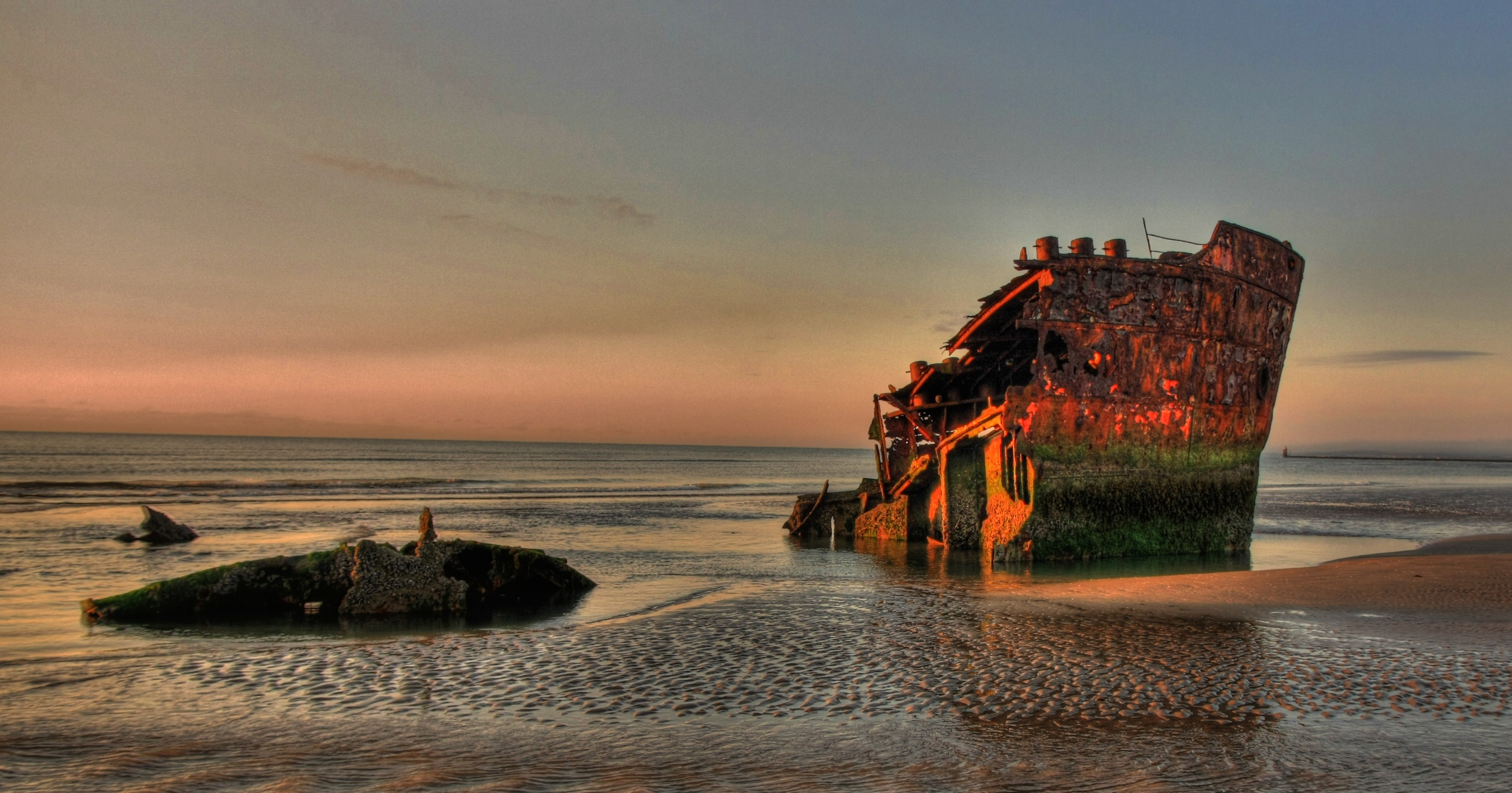
V Irish trader


 On her last voyage she was carrying 410 tonnes of fertiliser which was bound for bristol in England.M

V Irish trader was a Hartlepool motor vessel grossing 344 ton's

She ran aground in 1974.

Nobody knows the real reason it went aground, it happened for tax reasons, drunken crew, or simple pilot error.

The coordinates are for the actual wreck which can be seen in google earth.
Please take extreme care when visiting this waymark Do not attempt to get close unless its at low tide.
beware the sand is very soft at this location.
Date of Shipwreck: 1974

Type of Boat: Other

Military or Civilian: Irish Merchant Navy

Cause of Shipwreck: Unknown

Accessibility: 
Can be accessed at low tide from Baltray Beach.

Diving Permitted: Not Listed
Visit Instructions:
Only log the site if you have visited it personally.
Floating over a site does not qualify as a find if it is a wreck that requires diving - you must have actually visited the site - therefore photos of the site are good.